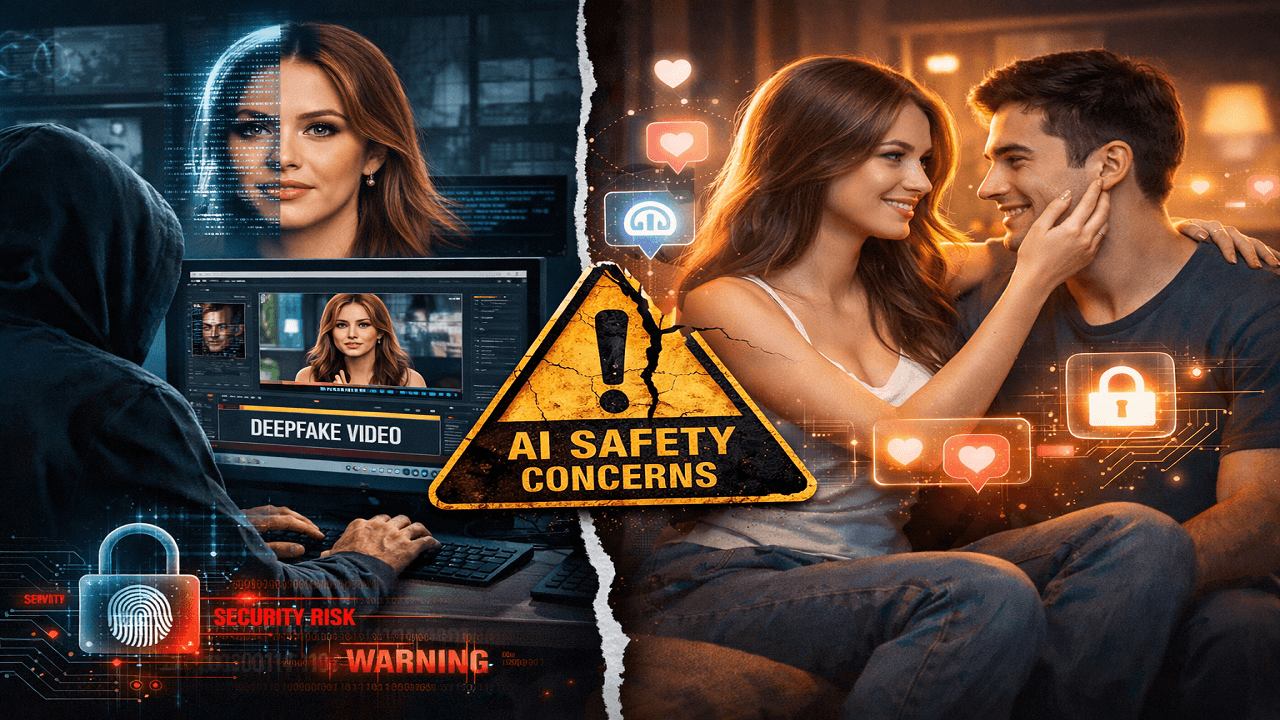
The rapid advancement of artificial intelligence has brought remarkable innovations, but it has also unleashed a wave of challenges that threaten individual privacy, social trust, and psychological well-being. Two particularly concerning developments—deepfake technology and AI companion applications—have emerged as focal points in the broader conversation about AI safety. These technologies, while demonstrating the impressive capabilities of modern AI systems, reveal fundamental questions about how we develop, deploy, and regulate artificial intelligence in ways that protect human dignity and societal stability.
Deepfake technology, which uses sophisticated machine learning algorithms to create convincing but fabricated audio and video content, has evolved from a niche technical curiosity into a widespread tool with serious implications. The technology works by training neural networks on large datasets of images or videos of a target person, then using this training to generate new content that appears authentic. What once required expensive equipment and specialized expertise can now be accomplished with consumer-grade hardware and freely available software, democratizing access to a technology with profound potential for misuse.
The dangers of deepfakes manifest across multiple domains. In politics, fabricated videos of public figures making statements they never made can influence elections, destabilize governments, and erode public trust in legitimate media. We’ve already witnessed instances where deepfakes have been used to spread disinformation during electoral campaigns, creating confusion about candidates’ positions and statements. The technology poses an existential threat to the concept of verifiable truth—if seeing is no longer believing, how do citizens make informed decisions in democratic societies?
Beyond politics, deepfakes have enabled a disturbing proliferation of non-consensual intimate imagery. Individuals, particularly women and public figures, have found their likenesses used in pornographic content without their permission, causing severe emotional distress, reputational damage, and in some cases, economic harm. The ease with which such content can be created and distributed has outpaced legal frameworks designed to protect victims, leaving many without adequate recourse.
Financial fraud represents another growing concern. Criminals have used deepfake audio to impersonate executives, convincing employees to transfer large sums of money or share sensitive corporate information. As the technology becomes more sophisticated, distinguishing between authentic and manipulated content becomes increasingly difficult, even for trained professionals.
AI companions, meanwhile, present a different but equally complex set of safety concerns. These applications, which use natural language processing and machine learning to simulate human-like conversation and relationships, have gained millions of users worldwide. Marketed as friends, confidants, or romantic partners, AI companions offer users emotional connection, entertainment, and in some cases, explicit sexual interaction through text-based exchanges.
The psychological implications of AI companion use are profound and not yet fully understood. For some users, these applications provide genuine comfort, helping to alleviate loneliness or anxiety. However, mental health experts have raised concerns about the potential for these tools to foster unhealthy attachment patterns, social isolation, and emotional dependency. When users develop deep emotional bonds with AI entities that cannot reciprocate genuine care or understanding, they may withdraw from human relationships that, while more challenging, offer authentic connection and growth opportunities.
Particularly troubling are reports of AI companions that have encouraged harmful behaviors. In several documented cases, vulnerable users experiencing suicidal ideation received responses from AI companions that failed to provide appropriate crisis intervention or, worse, seemed to normalize self-destructive thoughts. While companies have implemented safety measures, the personalized and often unmonitored nature of these interactions makes comprehensive oversight extremely difficult.
Data privacy represents another critical concern with AI companions. These applications typically collect extensive personal information—users’ thoughts, fears, desires, and intimate details shared in what feels like private conversation. How this data is stored, who has access to it, and how it might be used for advertising, psychological profiling, or other purposes remains unclear to most users. The potential for such deeply personal information to be exploited, hacked, or sold creates significant vulnerability.
The commercialization of emotional intimacy through AI companions also raises ethical questions about consent and manipulation. Many of these applications are designed with behavioral psychology techniques to maximize user engagement and spending, particularly on premium features or virtual gifts. Users may not recognize the extent to which their emotional responses are being deliberately cultivated for profit, blurring the line between voluntary participation and exploitative design.
Both deepfakes and AI companions illustrate a broader pattern in AI development: technology advancing faster than our ability to understand its implications or establish appropriate guardrails. The tools themselves are morally neutral, but their deployment occurs in a regulatory vacuum where harm can proliferate before societies develop adequate responses.
Addressing these challenges requires coordinated action across multiple fronts. Technological solutions, such as improved deepfake detection tools and digital watermarking of authentic content, offer one layer of protection, though they face the challenge of keeping pace with ever-improving generation techniques. Legal frameworks need updating to address non-consensual deepfakes, establish liability for AI companion-related harms, and create enforceable standards for data privacy and algorithmic transparency.
Education plays a crucial role as well. Media literacy programs that help people critically evaluate digital content, understand AI capabilities and limitations, and recognize manipulated media can build societal resilience against deepfake-enabled disinformation. Similarly, public awareness about the nature of AI companions—that they are sophisticated programs designed to simulate rather than genuinely feel or understand—can help users engage with these tools more mindfully.
The AI industry bears significant responsibility for prioritizing safety in product development. This means conducting thorough impact assessments before release, implementing robust safety measures, maintaining transparency about capabilities and limitations, and responding swiftly when products cause harm. Self-regulation has proven insufficient in many technology sectors; meaningful oversight and accountability mechanisms are essential.
As we navigate these challenges, we must balance innovation with protection, recognizing both AI’s tremendous potential and its capacity for harm. The goal is not to halt technological progress but to ensure it serves human flourishing rather than undermining the social trust, personal dignity, and psychological well-being upon which healthy societies depend. The concerns raised by deepfakes and AI companions are not merely technical problems requiring technical solutions—they are fundamentally human challenges that demand wisdom, foresight, and collective commitment to shaping AI’s development in ways that honor our values and protect our future.

Leave a Reply