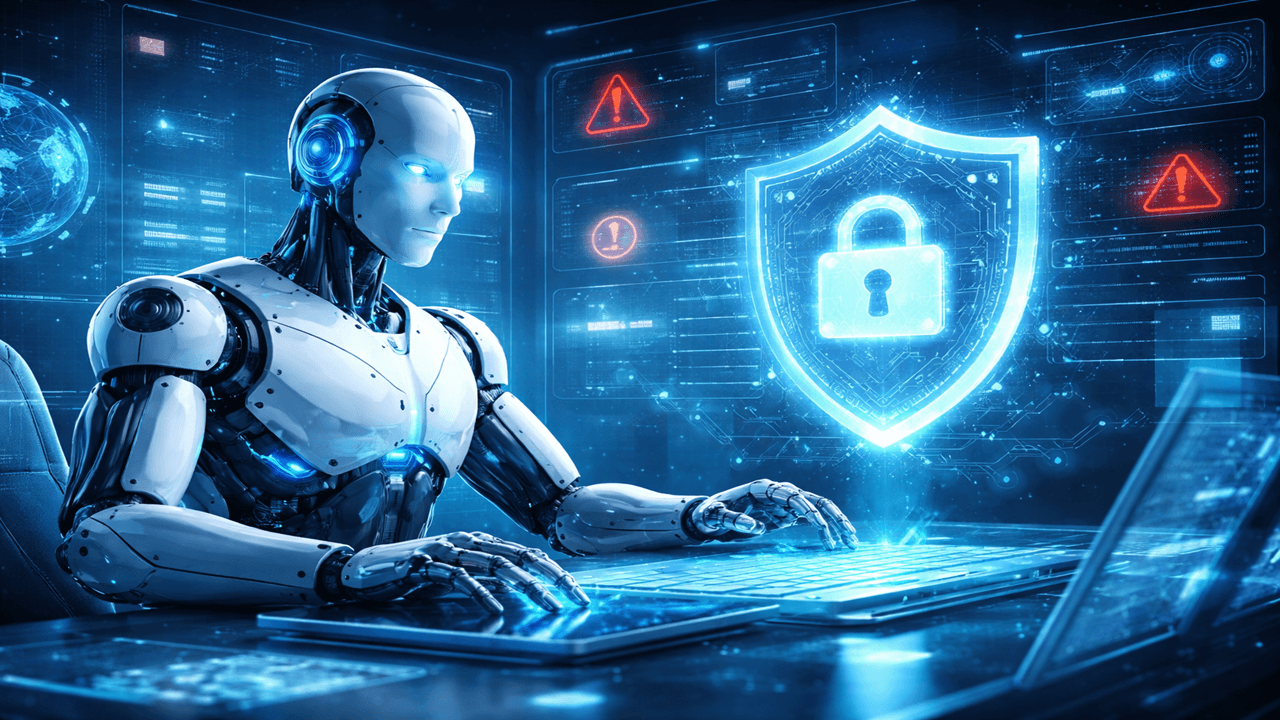
The field of cybersecurity is changing dramatically, which is changing how businesses protect themselves from a constantly changing array of online dangers. The emergence of artificial intelligence agents—autonomous systems with the capacity to think, reason, and act with a level of sophistication formerly reserved for seasoned human security professionals—is at the heart of this shift. These AI bots are no longer limited to identifying straightforward malware signatures or reporting questionable login attempts. The cybersecurity playbook has completely changed as a result of their proactive threat hunting, real-time incident response, and even attack prediction.
The cybersecurity sector has suffered from a severe talent shortage for decades. There are still millions of open positions worldwide, and the need for trained analysts, threat hunters, and incident responders greatly exceeds the supply. In the meantime, cybercriminals have become more well-funded, organized, and clever, launching attacks at a speed and scope that is simply unmatched by human teams. AI agents, which are machines that never sleep, never get tired, and can process billions of data points in the time it takes a human analyst to finish their morning coffee, have entered this gap.
Large language models and sophisticated machine learning architectures serve as the foundation for these agents, which are trained on extensive datasets of cybersecurity expertise, past attack trends, vulnerability databases, and threat intelligence feeds. Their ability to reason is what makes them truly transformative, not merely their speed or capacity to handle massive amounts of data. In ways that go well beyond the straightforward rule-based detection engines of the past, they are able to correlate seemingly unrelated information across different systems, spot minor anomalies that even the most skilled human eye would miss, and make sophisticated assessments regarding danger.
Major technology and cybersecurity companies have begun deploying these agents in earnest. Microsoft, Google, CrowdStrike, and a growing number of startups have all introduced AI-powered security tools that operate with varying degrees of autonomy. Some function as intelligent assistants, augmenting human analysts by summarizing alerts, drafting incident reports, and recommending remediation steps. Others operate far more independently, autonomously isolating compromised endpoints, blocking malicious network traffic, and even patching vulnerabilities without waiting for human approval. The line between tool and teammate is blurring rapidly.
One of the most significant capabilities emerging from this new generation of AI agents is what researchers call autonomous threat hunting. Traditional security operations centers rely on analysts to manually query logs, investigate alerts, and piece together attack narratives. It is painstaking, time-consuming work, and the sheer volume of alerts generated by modern enterprise environments has created a phenomenon known as alert fatigue, where analysts become so overwhelmed that genuine threats slip through unnoticed. AI agents address this directly by continuously and autonomously sifting through network telemetry, endpoint data, cloud logs, and identity records, correlating information across these sources to surface genuine threats with a precision and consistency that human teams cannot sustain around the clock.
These agents are also proving adept at handling the early stages of incident response. When a breach is detected, the first minutes and hours are critical. Attackers count on slow response times to expand their foothold, exfiltrate data, and establish persistence before defenders can react. AI agents can dramatically compress this window, automatically containing affected systems, preserving forensic evidence, notifying relevant stakeholders, and beginning the process of root cause analysis — all while a human incident commander is still being paged. By the time a human takes the wheel, the agent has already done the heavy lifting of containment and preliminary investigation.
Beyond reactive defense, AI agents are beginning to demonstrate genuine offensive security capabilities that are being harnessed for defensive purposes. Penetration testing, the practice of ethically hacking systems to find vulnerabilities before real attackers do, has traditionally been a highly specialized and expensive discipline. AI agents are now capable of conducting automated penetration tests, identifying misconfigurations, probing for weak credentials, and chaining together complex multi-step attack scenarios that mimic the tactics of sophisticated adversaries. This democratizes access to high-quality security assessments, allowing smaller organizations with limited budgets to test their defenses in ways that were previously available only to large enterprises.
There are, of course, serious concerns accompanying this rapid advancement. The same capabilities that make AI agents powerful defenders also make them potentially powerful attackers. Cybercriminals are already experimenting with AI to craft more convincing phishing emails, automate vulnerability scanning, and accelerate the development of malicious code. The cybersecurity community is essentially engaged in an arms race where both sides are rapidly adopting the same underlying technologies, and the outcome of that race remains deeply uncertain.
Privacy and accountability present additional challenges. When an autonomous agent makes a decision — blocking a user’s access, isolating a server, or initiating a forensic investigation — questions arise about oversight, transparency, and the potential for error. False positives can disrupt legitimate business operations, and systems that act with too much autonomy risk making consequential mistakes without sufficient human checks. The industry is actively grappling with how to design these agents in ways that preserve meaningful human oversight while still capturing the speed and scale advantages that make them valuable in the first place.
Regulatory frameworks are struggling to keep pace. Governments and standards bodies are beginning to examine how existing cybersecurity regulations apply to AI-driven security operations, and what new rules may be needed to govern the use of autonomous systems in sensitive environments. These conversations are happening in parallel across the United States, the European Union, and beyond, but coherent global frameworks remain a work in progress.
The trajectory is evident despite these obstacles. AI agents are quickly becoming essential members of cybersecurity organizations, performing everything from autonomous first responder to untiring analyst. Organizations that successfully collaborate with these technologies, viewing them as competent partners rather than as tools, will have a significant edge in the years to come. The field of cybersecurity is no longer solely human. Artificial intelligence and human skill are increasingly working together, and this partnership will only grow.

Leave a Reply