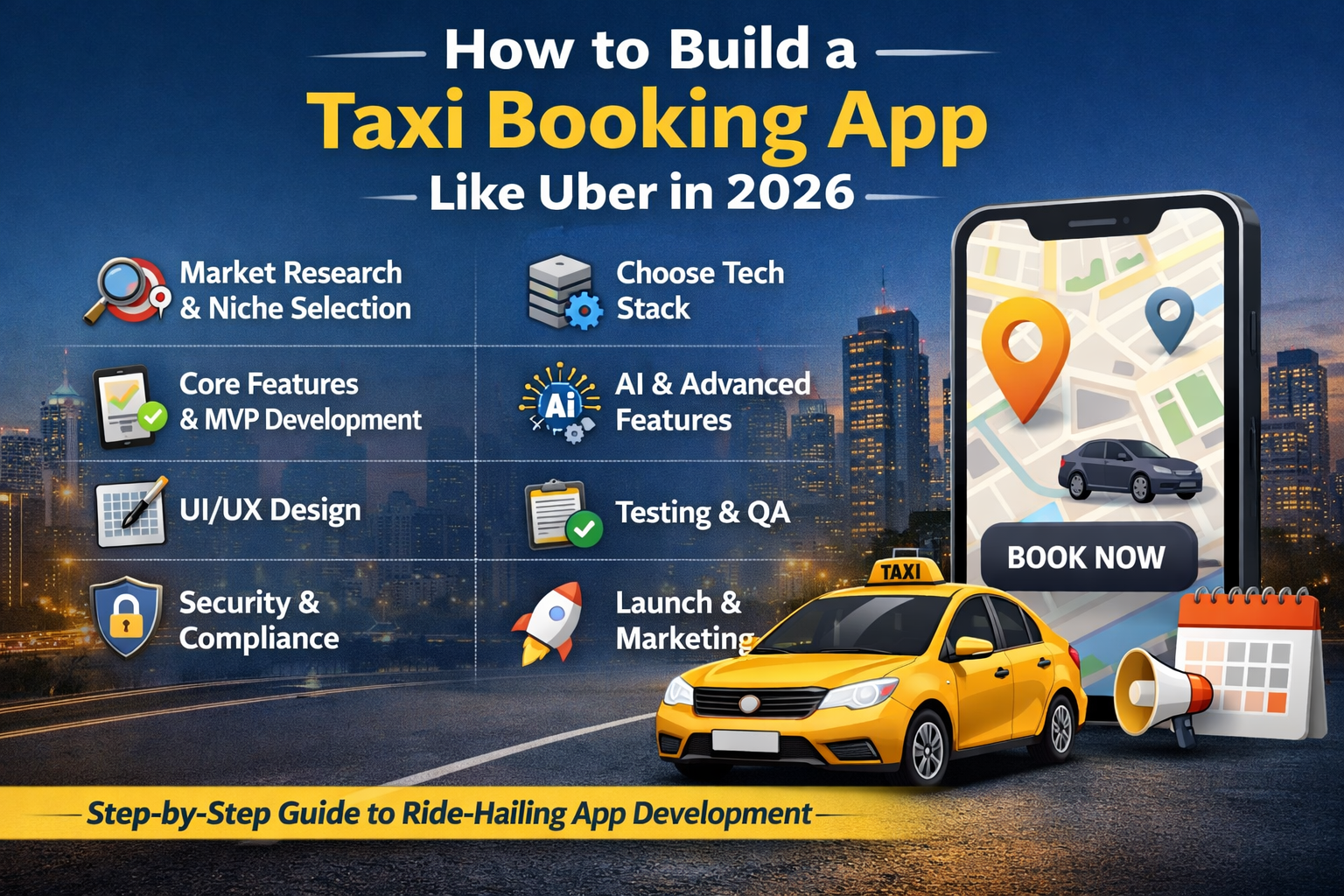
The ride-hailing industry continues to evolve rapidly, with advanced technologies, changing consumer behavior, and smart mobility solutions reshaping urban transportation. In 2026, building a taxi booking app like Uber requires more than just basic ride-matching functionality. It demands intelligent features, seamless user experience, high-end security, and scalable infrastructure.
If you’re planning to launch a ride-hailing platform, this guide will walk you through the complete development process.
Step 1: Understand the Market & Define Your Niche
Before jumping into development, conduct thorough market research. Identify:
-
Your target audience (daily commuters, corporate clients, tourists)
-
Geographic location (single city, multi-city, global)
-
Competitors in your region
-
Regulatory requirements
Instead of directly copying Uber, consider choosing a niche such as electric taxis, luxury rides, women-only services, or carpooling. A clear niche helps you differentiate and attract loyal users.
Step 2: Define Core Features
A taxi booking app typically includes three main panels:
1. Passenger App Features
-
User registration & profile management
-
Real-time GPS tracking
-
Ride booking & scheduling
-
Fare estimation
-
Multiple payment options
-
Ride history
-
Ratings & reviews
-
SOS emergency button
2. Driver App Features
-
Driver registration & verification
-
Ride request notifications
-
Route optimization
-
Earnings dashboard
-
Availability toggle
-
Trip history
3. Admin Panel Features
-
User & driver management
-
Commission management
-
Analytics dashboard
-
Reports & insights
-
Payment tracking
These foundational features ensure smooth operations for riders, drivers, and administrators.
Step 3: Choose the Right Technology Stack
In 2026, scalability and performance are critical. Your tech stack may include:
-
Frontend: Flutter, React Native, or Swift/Kotlin
-
Backend: Node.js, Django, or Ruby on Rails
-
Database: PostgreSQL or MongoDB
-
Cloud Hosting: AWS, Google Cloud, or Azure
-
Maps & Navigation: Google Maps API
-
Payment Integration: Stripe, PayPal, Razorpay
Modern ride-hailing apps rely heavily on real-time data processing and cloud-based infrastructure to manage thousands of concurrent users efficiently.
Step 4: Integrate Advanced Technologies
To compete in 2026, your app must go beyond traditional functionality.
AI & Machine Learning
-
Predict ride demand
-
Dynamic pricing optimization
-
Fraud detection
-
Smart route suggestions
IoT Integration
Connected vehicles can share real-time diagnostics and location updates, enhancing operational efficiency.
Blockchain (Optional)
Secure payment processing and transparent transaction logs can boost user trust.
Step 5: Focus on UI/UX Design
User experience plays a major role in app adoption. The design should be:
-
Clean and intuitive
-
Fast-loading
-
Easy to navigate
-
Minimal in steps to book a ride
Remember, users prefer booking a ride in under 10 seconds. A complicated car rental app development interface can increase uninstall rates.
Step 6: Ensure Strong Security Measures
Security is non-negotiable in ride-hailing apps. You must implement:
-
End-to-end encryption
-
Secure payment gateways
-
Multi-factor authentication
-
Data privacy compliance (GDPR, local regulations)
-
Real-time fraud detection
Passenger safety features like emergency contacts and ride tracking also build trust and reliability.
Step 7: Develop MVP First
Instead of launching a fully loaded app immediately, start with a Minimum Viable Product (MVP).
An MVP includes:
-
Basic booking functionality
-
GPS tracking
-
Online payments
-
Driver-passenger matching
This approach allows you to test the market, gather feedback, and refine features before scaling.
Step 8: Testing & Quality Assurance
Comprehensive testing ensures smooth performance across devices and platforms.
Types of testing required:
-
Functional testing
-
Performance testing
-
Security testing
-
Usability testing
-
Compatibility testing
Apps like Uber succeed because they offer reliable, bug-free performance even under high demand.
Step 9: Launch Strategy & Marketing
A successful launch requires a solid marketing strategy:
-
Offer discounts and referral bonuses
-
Partner with local businesses
-
Use social media promotions
-
Implement driver incentive programs
Early traction is crucial for building brand visibility and attracting both riders and drivers.
Step 10: Continuous Updates & Scaling
After launch, monitor:
-
User feedback
-
App performance metrics
-
Driver retention rates
-
Revenue growth
Introduce updates regularly to stay competitive. Features like subscription plans, loyalty programs, or corporate ride packages can increase long-term profitability.
Development Cost Considerations
The cost of building a taxi booking app depends on:
-
Feature complexity
-
Technology stack
-
Design requirements
-
Development team location
-
Integration of advanced technologies
Partnering with an experienced taxi booking app development company ensures better scalability, faster deployment, and high-quality performance.
Additionally, if you plan to expand into vehicle leasing or rental models, you may also consider professional car rental app development services to diversify your transportation ecosystem.
Since ride-hailing platforms fall under broader mobile app development, choosing a skilled team with domain expertise can significantly impact your app’s success.
Final Thoughts
Building a taxi booking app like Uber in 2026 requires strategic planning, cutting-edge technology, and user-centric design. It’s no longer just about connecting drivers and passengers—it’s about delivering convenience, safety, and intelligent mobility solutions.
By focusing on scalability, security, AI-driven features, and seamless user experience, you can create a future-ready ride-hailing platform that stands out in a competitive market. With the right execution and continuous innovation, your taxi booking app can become a key player in the evolving digital transportation industry.

Leave a Reply